
Wednesday, August 30, 2017
When it comes to wireless technology, there’s nothing like a Dane
 |
Think you know who invented Bluetooth? It was this
guy, a Viking King named Harald Bluetooth who
unitedDenmark in the late 900s.
|
That happened to me this month when Mrs. BlueScreamOfJeff and I were cruising on the Baltic Sea visiting the Viking homelands.
So what could this group of great explorers and warriors possibly have to do with my job working with computers and other high-tech gadgets more than a millennia after they began raiding their way across Europe, overrunning England and eventually making it to the shores of North America?
It turns out quite a lot, actually.
On our visit to the Copenhagen, the capital and most populous city in Denmark, we learned that their country’s first king “invented” Bluetooth – the short-range wireless technology that connects things like keyboards and mice to computers, headphones or speakers to your portable music player and even connects your smartphone, smartwatch and car together.
Okay, so maybe King Harald Bluetooth, the man who united Denmark and made it a Christian nation, didn’t actually invent that technology.
That was done by Dr. Jaap Haartsen, an engineer working at the Ericsson corporation, based out of Sweden.
But according to our tour guides, it was old King Harald who inspired it.
It seems this Viking king had a pretty good knack for getting people from different lands to work-together for the betterment of all, much the way the technology he inspired gets dissimilar devices to work together for our betterment. Legend also has it that he had a penchant for snacking on blueberries which would then make his mouth appear blue.
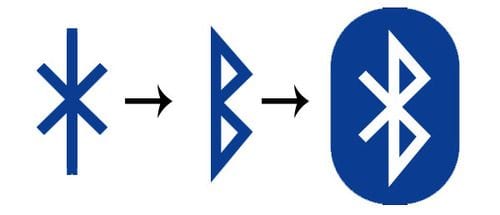 Oh and that now ubiquitous little blue, Bluetooth logo you see on everything these days?
Well that’s not a symbol used to denote electronic circuits or something cool just dreamed up by a graphic designer. It’s actually a combination of the old Danish runes for “H” and “B,” the good king’s initials.
So the next time you’re pairing those fancy new wireless headphones you just got with your ultra-modern smartphone, thank the Vikings and lift a horn of ale and shout “Skål!” in their honor.

Saturday, July 29, 2017
Change, my dear, and it seems not a moment too soon….
I never thought it would come to this.
But just days away from marking my 52nd year on this planet, I’ve come to the stunning and quite unexpected realization that I am old.
I don’t mean physically. I’ve been noticing those little age-related aches-and-pains for a while now. What I mean is mentally.
At first I thought it was just a nostalgia phase I was going through. I’d spend hours looking at old pictures of my home town and college in online archives and wishing I could go back to those times and places for a day or two.
Then I found myself noticing that time was flying by faster than I ever remember it doing in the past. Whole days now seem to disappear into the ether before I can even get to half the things I’d planned on getting done. It seems to me just a year or two ago, I could get multiple things done in a day while now I can’t seem to even accomplish one.
Even this summer has seemed to fly by. It feels like it has just gotten started and it’s already almost my birthday, which comes at the tail-end of the season. Where did those long, lazy, hazy days of summer go?
Then, just to cap things off, came the announcement of the new “Doctor Who.”
Okay, I know that sounds like a non sequitur, but stay with me for a moment.
You see, when I heard the announcement last week that Jodie Whittaker – a woman – would be playing the 13th incarnation of titular character in BBC’s long-running sci-fi series about a mysterious time-traveler and his – or should I now say her – oddly shaped time machine, I was upset.
 |
Jodie Whittaker as the latest
incarnation of The Doctor. |
My first thought was why do they have to go and change things! For its 54-year run, the part of The Doctor had always been played by a man!
Look, I’m not against gender equality and it’s not that I think that Jodie Whittaker won’t make a fine Doctor. I’m sure she will. Like all the other Doctors who came before her, I’m sure I’ll grow to like her and even miss her when it comes time to hand the role off to someone else.
It’s just that it was a huge and drastic change in my life which has recently been rocked with other unexpected and upsetting changes. And, as I’ve come to realize over this last week, I’m not as tolerant of change as I once was.
I only came to this realization when I found myself trying to justify my feelings by essentially saying: “but we’ve always done it this way!”
Have I mentioned to you that I hate that phrase?
It’s the been the bane of my existence as an IT guy, when trying to get people to adjust to updates and changes in technology. It aggravated me that people were so stuck in their ways that they couldn’t see that the new piece of equipment or software I was giving them would actually make their lives easier if they would just give it a chance.
And to my horror, I found myself being that cranky old-person who didn’t want to give up his “tried and true, old fashioned” way for something potentially better.
When the hell did this happen to me???
I remember as a kid being excited at the prospect of entering a whole new decade at the end of the 1970s and seeing what changes it would bring as we grew ever closer to the year 2000.
Even as an adult, I looked forward to living in “The Future” and getting to play with all the new sci-fi inspired gadgets we were sure to get in the new millennium. And with the exception of the flying car and robot maid, I haven’t been disappointed.
So why now, don’t I look forward to and accept change as readily as I did when I was younger?
The only answer, I can think of, is that I’m getting old.
And that depresses me because the last thing I want to become is that stereotypical cranky old man who complains about how things were always better “back in my day.” I still want to be that bright-eyed young man who still looks to the future with awe and is excited by all the wonderful changes it will bring.
So thank you BBC, Chris Chibnall and Jodie Whittaker for rattling my world and making me aware of the road I was heading down before it was too late. I don’t want to become that old man. I want to stay young and it seems the only way I’ll truly ever be able to do that is by following the sage advice once uttered by another incarnation of your famous Time Lord:
“Change my dear, and it seems not a moment too soon.”
Friday, June 30, 2017
Being certifiable ain't all it's cracked up to be
 |
| Copyright: Scott Adams / "Dilbert" |
“I’m just hanging this,” I reply showing him a shiny new certificate, fresh off my color laser printer.
The Elder Geek squints as he takes the framed piece of paper from my hands and peruses it.
“VMware is proud to award the title of VMware Certified Professional 6 Data Center Virtualization to Blue Scream of Jeff,” he reads aloud. “You know in my day, being certifiable wasn’t something to be proud of….” he grumbles handing me back my hard-earned certificate.
“I wasn’t even aware computers had been invented back in your day,” I reply just as snarkily.
The Elder Geek frowns in the way only a curmudgeon like him can. “Well they were, Mr. Smartypants! They were just called abacuses back then, and you needed a lot more than some piece of paper to know how to use one! So just what exactly does being a whatever-it-is certified professional mean?”
I go on to explain to him about how this software allows you to run multiple computers and servers all on one piece of hardware instead of needing an individual piece of hardware for each server or computer and how it makes managing a modern datacenter much easier. Since servers or computers are no longer tied to a particular piece of hardware, they can be shifted around in the event of hardware failure, ensuring fault tolerance and keeping them almost always available to users.
The Elder Geek nods appreciatively. “Sounds complicated.”
“Oh it is!” I enthuse. “Conceptually it’s really simple. Just like picking up a poker chip off one table and moving it to another. But with all things IT, the devil is in the details, and it’s not an easy task to get the whole thing to work properly and efficiently.”
Again the Elder Geek nods. He may be old, but he’s been to the IT Rodeo before. He knows that nothing in IT is ever as easy as it sounds.
“So how many years did it take you to earn this certification?” he asks.
“Ummm…. A week,” I mumble into the floor.
“A week? A WEEK!” he asks incredulously.
“Yeah,” I say. “But it was a really long, intense week. Twelve to 14 hour days in class and studying…. And we had to pass two tests. And they were really hard!”
The Elder Geek just shakes his head. “So you spend a week – sorry, an INTENSE week – studying this stuff and then had to answer some 120 multiple choice questions and I’m supposed to believe that’s going to make you an expert on this stuff?”
“Well according to the industry, I am!” I say defending myself. “That’s all hiring managers want to see anymore. They think all those certifications mean you know what you’re doing! If you don’t got ’em, you can’t even get your foot in the door!”
“Phooey!” The Elder Geek snorts. “All that piece of paper means is that you know how to pass a test! It doesn’t prove you know how to make things work in the real word outside a lab environment! I don’t care how good their simulations are, but no programmer can replicate the kind of havoc and failures real users can cause! It also doesn’t prove you know how to solve those oddball problems that always seem to come at you from out of the blue! Only years of experience can teach you that! I’d rather have a dozen techs or engineers with years of problem solving experience under their belts and a proven ability to think their way out of problems than a single one of your “certified pros” who only knows how to do what they showed him or her in some class! I can teach them the other stuff,” he rants.
“Look kid, I don’t mean to rain on your parade. I’m sure you worked really hard to lean all that and pass those tests. But don’t believe all that industry hype. Getting that piece of paper doesn’t make you a pro. It just means you’re a journeyman. You’re now only just competent to work on that equipment with that software. Maybe in a few years after you’ve been through the ringer and problem solved your way out of a few near disasters, will you be able to call yourself a pro…
“Now, give me that hammer and nail, before you put anymore holes in my wall.”
DISCLAIMER: I want to make clear that I do NOT think that these certifications serve no value. They do. They help us IT folks learn new skills and keep up with the ever-changing nature of our business. But employers need to realize that there is no substitute for experience, and just because you don't have a piece of paper saying you're an expert in something, doesn't mean you aren't an expert. And for the record, while I only just earned my VMware certification this month, I have worked with VMware for the last few years in addition to have 20-plus years experience as a tech.
Monday, May 29, 2017
Looks like you really do NEED an app for that ...
 Well, it finally had to happen. Mrs. BlueScreamOfJeff was finally and most reluctantly dragged into the modern era.
That’s right folks, over the recent holiday weekend, my beautiful bride of over 20 years, finally gave in and bought her FIRST smart phone. A decade after Apple turned the world upside-down with its iPhone, she’ll finally be getting one herself.
It’s not that she’s a luddite or anything. She appreciates modern technology and has her own collection of electronic gadgets: a laptop, e-reader and even a tablet computer. It’s just that all this high-tech stuff and she aren’t exactly on a first-name basis. In fact, I’ve often said she tends to have trouble with anything more complicated than a toaster oven! Of course her standard reply to this is, “That’s why I married you. Built-in tech support.”
So about a month or two ago, when she first broached the subject of replacing her old dumb-phone with a smart phone I was surprised. She never wanted a cell phone in the first place and only got one because she drives a lot for her job and the one time her car actually did breakdown, she had a hell of a time finding a payphone.
For years, she just had clamshell-style phones, which she only used from time-to-time. (They probably spent more of their lives switched off in her car or in her book bag than actually on). Then a few years ago, she reluctantly upgraded to a phone with a keyboard because her boss was getting pretty upset at her because she could not text her during their workday (or after hours, which my wife absolutely hates).
That’s why I was shocked when she asked me if I thought she should get one.
“You hate it when your boss texts you at all hours now. With a smartphone, she’ll know you’ll have e-mail access too, and will probably expect you to answer that even after work. I thought you didn’t want that,” I said confused.
She doesn’t. In fact she said she doesn’t plan on putting e-mail on it.
“Then why do you want a smartphone?” I asked her now very confused.
Her answer surprised me not because it was something I’d never thought of, but because of its shrewd critique of our modern society.
She wanted one because more and more she felt like she was missing out and being excluded from taking advantage of everyday things that only people with smartphones could participate in.
It really hit her when she was at a professional conference down in Philadelphia. She wanted a schedule and map of the venue and couldn’t find one. When she finally got a hold of one of the event organizers, and asked for the info, they told her it was on their app, and she should download it. When she told the person she didn’t have a smartphone, they looked at her like she had leprosy.
Then there is the fact that at more and more of the stores she frequents, there are special offers she can’t take advantage of because she doesn’t have a smartphone.
“You don’t know how many free teas I’ve missed out on at WaWa because I don’t have their app,” she told me. “Pretty soon,” she continued, “I’ll probably need one for the grocery store” as they ditch their customer loyalty swipe cards for digital apps.
The more I thought about it, the more I saw she was right. It’s kind of just assumed that every man, woman and child above a certain age (which seems to be getting lower and lower each year) has a cell phone, and companies, professional organizations and even government are catering to the smartphone carrying public and forgetting about the ever-shrinking few who don’t have such devices.
If things keep on going the way they are, a smartphone is going to have to be “standard issue” item if you want to participate in society. If you don’t have one, you’ll be like the Dickens-esque pauper with his or her face pressed against a glass window peering and envying all the rich-folks enjoying a holiday meal.
Back when I was a kid, I thought all you needed to participate in society was a driver’s license and job. Now it seems you need a smartphone and an app for that.
* This column was approved by Mrs. BlueScreamOfJeff and she endorses its content!
Saturday, April 29, 2017
Net Neutrality is really a free-speech issue

I don’t like to discuss politics on this blog. When I created it, it was supposed to be a fun place for me to blather away about geek culture and technology, but more and more I feel compelled to have to speak about politics and how the people we are electing to serve our interests are instead serving themselves and selling all of us out in return.
So, what’s got my ire up now?
New Federal Communications Commission Chairman Ajit Pai recent announcement that he wants to dismantle Net Neutrality regulations, which guarantee that Internet Service Providers cannot favor or block any content or application based on its source.
This coming on the heals of last month’s decision by Congress to allow ISPs to turn us into commodities whose private information can be bought and sold without our consent just shows how the folks in Washington no longer care nor represent the average person. They’ve become shills for whatever company or lobbyist has deep enough pockets to buy them off.
What’s got me so angry about this announcement is that I see this as another direct assault on our individual rights. I spent the first 15 years of my career as journalist, defending the First Amendment to the U.S. Constitution:
Congress shall make no law respecting an establishment of religion, or prohibiting the free exercise thereof; or abridging the freedom of speech, or of the press; or the right of the people peaceably to assemble, and to petition the Government for a redress of grievances.
 And now in my second carrier as a “Techie” I’ve come to realize that Internet – even with all its faults – has become the main forum where we exercise these rights, much in the same way our our Colonial forefathers and mothers used town squares and newspapers.
In today’s digital-centric society, guaranteeing that all traffic moves across the Internet with equal priority is very much a part of that free exercise of speech, the press, peaceable assembly and even petitioning of the government guaranteed in that great founding document.
I’ve already discussed why ISP’s arguments for ending Net Neutrality is frankly, bullshit, back in my 2015 column, “Making Internet access a public utility is a Net gain for us all.” Yet these companies persist on telling us the same lies, so they can increase their revenues.
Trust us, they say. We won’t abuse this power.
Yeah, right, like the way you are selling our browsing history without our consent?
Or how ’bout limiting our access to say Netflicks or Hulu or other streaming services unless we also subscribe to your cable channels?
Look, I’m not against ISPs wanting to make more money. In fact, quite the opposite. I’m all for it. I want them to continue to be successful and stay in business, so I can keep the high-speed Internet I’ve now come dependent on.
What I’m against is ISPs – and the politicians they are buying off – controlling what goes on in the medium and forum where much of our public discussion, debate and cat video-watching takes place.
We would never allow the government nor a consortium – no, make that a cabal – of private companies to buy up all the newsprint, broadcast licenses, cable channels, etc. and only rent them out to people it deems worthy or can afford to pay their exorbitant prices.
We don’t let telephone, electricity, gas, water, or sewerage companies do this. They must treat everyone in their service areas equally. Even broadcasters (TV, radio and cable) are bound by similar laws and must prove they are serving the public good of their communities.
So why the hell should ISPs not be held to similar standards?
The answer for us consumers is simple. They should be!
That’s why I need everyone reading this to contact your local senators, congressmen and the FCC to let them know in no uncertain terms to leave the current Net Neutrality laws intact!
Friday, March 31, 2017
We’re all just commodities now…

Congratulations everyone!
With a stroke of pen, Congress has just turned all U.S. citizens into commodities to be bought and sold to the highest bidder.
Don’t know what I’m talking about?
Earlier this week, Congress approved a bill that would remove the block, which up until now, had prevented Internet service providers, such as Comcast, Verizon, Time-Warner Cable, and others, from selling their customers’ web browsing and app usage data without their customer’s explicit consent.
This means the company that provides you access to the Internet either at home or over a cellular network that your smart phone or tablet connects to can now access your browsing habits, app usage, location and even Social Security numbers and sell them to anyone they want. And they can do it without getting your permission first!
So how does this affect you?

But this goes beyond just embarrassing medical conditions. It lets ISPs know just about every intimate detail of our lives, because let’s face it, the Internet has become an integral part of our 21st century existence. (Go ahead, I dare anyone to try and live a normal life without using a device connected to the Internet!) The repeal of this bill lets businesses spy on us in our homes in a way Republicans would rail against if government tried to do the same thing!
So what I want to know from those Senators and members of the House of Representatives who voted for this bill is, where is your outrage over this invasion of your constituents’ privacy now?! How is this any different from the government “tapping” our phones or eavesdropping on our other electronic communication? Why are you not apoplectic over this gross infringement of U.S. citizen’s right to privacy?
I know in the Internet Age, we’ve all been giving away our rights to privacy little-by-little, whether it’s us posting personal information on Facebook or other social media sites, or agreeing to let some company monitor our movements through or smart phones so we can use an app to get a discount on some product or service. But at least that’s been our choice!
But what I find most heinous about this decision is that it takes the choice out of our hands. We no longer get to choose what part of our private lives we get to share with others and which parts we get to keep secret. And to add insult to injury, we’re also not getting anything in return for this.
Look if Comcast, Verizon or any other ISP wants to know all this information about me so they can make money off me, then damn it, I want something in return!
I want my high-speed Internet access for free! And forget about imposing data limits on my cell phone bill too! That should be free as well.
So until ISPs are willing to give me something valuable in return for all the data they are collecting from me, then they shouldn’t be able to have my data! If you agree with me, then pick up the phone or email your state’s senators and representatives and let them know you want your rights back now!
HOUSE OF REPRESENTATIVES MEMBERS

|
U.S. SENATE MEMBERS

|
Sunday, February 26, 2017
Who morns for Apollo?

Earlier this month, actor Richard Hatch passed away from pancreatic cancer with nary a blip on the news. He was 71.
Hatch was probably best known for playing Capt. Apollo on the ABC TV show, “Battlestar Galactica” in the late ’70s, and unlike other Sci-Fi icons from that era who have recently passed away, his death barely even rated a passing mention on my Facebook timeline.
Unlike the coverage given to Carrie Fisher (December 2016) and Leonard Nimoy (February 2015), Hatch’s death went seemingly unnoticed by most of the mainstream media. Even on some Sci-Fi websites his death only warranted an article or two the day his death was announced as opposed to the days of articles Nimoy and Fisher got.
Now, I realize Hatch’s contribution to science fiction is no where near that of Nimoy and Fisher. Let’s face it, the original “Battlestar Galactica” lasted only one season and didn’t have the cultural impact of either “Star Trek” or “Star Wars.” Still it seemed a shame.
I was in my early teens when it came out, and like other geeks my age, I was a fan of the show. In fact, I’m sure if I looked around hard enough, I could probably still find one of audio recordings I used to make of the original broadcasts on my portable tape recorder, so I could listen back to them later. (Yes, these were the days before we had TiVos and DVRs. In fact it was even before the VCR became ubiquitous!)
So naturally when I heard about his passing, I thought I should write about it here, adding to my now ever-growing series of posthumous memorials to the sci-fi/fantasy heroes of my youth.
The only problem is Hatch really wasn’t really a hero of mine in the way Leonard Nimoy or Ray Bradbury was. Nor like Carrie Fisher, did he play a character who “broke the mold” and changed the way we viewed the role of a certain class of people in the genre.
The Capt. Apollo of the original show was an archetype: The handsome, straight-laced hero with strong moral convictions. Or in other words, the “nice guy” as opposed to his co-star Dirk Benedict’s Starbuck character, who was the loveable, glib, rogue.
Now there’s nothing wrong with that. The show was meant as nothing more than a light sci-fi action-adventure show, and, as I mentioned above, I rather enjoyed it. So I thought Hatch’s passing at least deserved some mention in this column if only for being a part of my fondly-remembered youth.
At first I was unsure what to say other than it being a shame and he seemed kind of young to die suddenly (I thought he was in his early to mid-60s). Nor did I realize he was sick.
But after thinking about it some more I realized there was one thing I could say about him, something I think that’s probably the greatest complement about someone’s life: Like the character he portrayed all those years ago, he was in real-life, a genuinely nice guy.
 |
| Richard at the San Diego Comic Con in 2010 |
same thing about him. He was rather an intense person but very nice to fans and approachable. I recall one person writing on one of the sci-fi forums I frequent that they had bumped into him at a coffee shop in LA many years ago when he was working on a “Battlestar” script. The person reported that he was kind of intense but spoke at length and passionately about the project to him.
Remarkable?
No. I’m sure there are many nice, down-to-Earth famous people out there. What is remarkable is that so often after a person finds some fleeting fame, they become embittered when they can’t reach the same level of popularity again. By all the reports I read after Hatch’s death, he never reacted this way.
After his appearance in “Battlestar” his career never really took off. Sure, it looks like he had steady work and a few guest starring roles throughout the ’80s and the early ’90 in shows like “MacGyver,” “Riptide,” “TJ Hooker,” “The Love Boat” and “Fantasy Island.” But he was never again the star in a show centered around him after “Battlestar.”
Now whether this was because of type-casting, it is hard to say. But rather than being embittered by it, Hatch seemed to embrace the fact that he was forever linked with his Capt. Apollo character.
He penned a number of “Battlestar” sequel novels and in 1999 even tried to revive the show, rounding up several former cast members and acting and producing, “Battlestar Galactica: The Second Coming.” It was a short proof-of-concept film to try and convince Glen A. Larson, the producer of the original show, to let him helm a revival.
But in 2004, when Larson decided to let Ronald D. Moore revive it instead, Hatch though disappointed, wasn’t bitter.
Again – as many people might have been tempted to do – he didn’t trash the new show or deride its darker, grittier take on the tale of human refugees fleeing from robots hell-bent on their annihilation. He was generally supportive of it. As a “reward,” Hatch was asked to appear in it in what was no-doubt a bit of “stunt casting” by Moore, in an effort to lure back fans of the original show.
Though the role of Tom Zarek was probably only intended as a one-time appearance, Hatch gave the part of the shady, reformed terrorist his best, and made the character so nuanced that the writers decided to make him a re-occurring character who played a major role in the show’s story arch.
 |
| Richard Hatch as Klingon Supreme Commander Kharn, in the "Star Trek" fan-film “Prelude to Axanar” |
Though I’m sad that we may never get to see the follow-up, full, feature-length version of the film (its makers had been sued by Paramount and CBS ) I think “Prelude to Axanar” is perhaps a fitting final tribute to a man who may not have intended to be known primarily as a sci-fi actor but always did his best for its fans. And that in the end, that’s not such a bad thing to be remembered for.
Subscribe to:
Posts (Atom)