
Thursday, June 28, 2012
Still Tugging at our heartstrings
 |
| FOR THE LOVE OF DOG: Tug asleep on his bed. He shared our home and lives from June 28, 2002 to Oct. 20, 2011.
He would have turned 14 years old today.
|
He passed away this past October at the ripe old age – for a Labrador retriever – of 13 ¼ years old. It’s been eight months now and I still find myself missing him. The pain is no longer as acute as it was during the fall and winter and the house doesn’t feel quite as empty as it did in the immediate aftermath of his death. In fact there are some days now that go by without me missing him at all.
In a way, it’s been nice to be dog-free and not have to worry about someone having to run home to let him out or feed him and I know my wife appreciates not being woken up well before her alarm goes off by the wet nose or bark of a hungry dog trying to mooch an early breakfast out of her. (Tug learned early that I wasn’t a morning person and that trying to wake me was nigh impossible.)
 |  |
| FIRST AND LAST PHOTOS At left is the first picture we ever saw of Tug. It was his "pet of the week" photo in my newspaper's pet adoption column. At right is the final picture of him taken on Oct. 20, 2011, the morning of the day we had him put to sleep. | |
Always lots of food.
In his last six-to-eight months of life, when even getting up off the floor seemed almost as difficult as climbing the stairs he used to bound up in a leap or two, his only goal in life seemed to be to make us happy. I am convinced now that he solidered on as long as he did because he thought he somehow owed us for rescuing him from the dog pound after the people who had no idea how to care for one dog, let alone two, and couldn’t see how wonderful and smart he was turned him over to the Bucks County SPCA because he was “too difficult.” In the end it was my wife and I who owed him for making us better people. I can’t imagine what my life would have been like over the past decade without my “pal” by my side.
Psychologists have expounded plenty about the nature of the bond between dogs and humans and why we miss them so much when they are gone.
“It appears that dogs have evolved specialized skills for reading human social and communicative behavior,” says Brian Hare, a Harvard shrink explaining the current thinking. He adds that they use this ability to figure out our moods knowing that if they do something that makes us happy they’ll be rewarded with food or attention. We see this behavior as signs our dogs love us while psychologists, like John Archer, from the University of Central Lancashire, sees it as dogs “manipulating human responses,” and becoming “the equivalent of social parasites.”
I think that’s a bit harsh.
Because if Mr. Archer ever had a dog like Tug, he would know dog’s aren’t “social parasites.”
Dogs are social creatures and crave companionship, much the way we do. Yes they learn how to manipulate their people, but then again, so do human children. And after seeing the way some children act these days, I’ve been glad I was just a dog-dad.
 |
| CLEAN AND HAPPY: Tug sporting a new tie he got after his last bath. |
I also realized that he didn’t have the higher reasoning powers of humans but I firmly believe that dogs understand the concept of love and loyalty. I mean how else do you explain the dog who wouldn’t leave the casket of his fallen Navy SEAL master or the black Lab who refused to leave the side of a canine friend who had been struck and killed by a passing car.
Psychologists would probably just attribute that to “pack instinct,” a vestige of a behavior left over from their wolf ancestors. Call me sentimental, but I think it is more than that just a “trick of evolution.” After all, when you come right down to it, a pack isn’t much different from a family. The same group dynamics apply.
I think that perhaps dogs were made man’s best friend as some sort of divine plan; a way of teaching us to be better people. How to be unselfish, how to be a good friend, a good listener and good confidant. Over the past nine and a quarter years that he graced our home, Tug taught us all those things and more. He taught us that no matter how bad your past was, it is now that really matters. He didn’t let his awful first few years stop from enjoying the time he spent with us. He was simply content to live in the moment taking pleasure in everyday things that we’d probably overlook. I used say his philosophy was “Every so often you need to stop and pee on the roses.”
I am sure that sometime in the future my wife and I will adopt another dog who needs a good home and fall in love with him. We’ll probably learn new things about ourselves from that dog too. But until that day comes, I will continue to remember all Tug’s loveable antics and take to heart the lessons he taught us.

Thursday, June 14, 2012
Remakes and reboots and sequels! Oh sigh!
 |
| DARK SHADOWS REDUX: Hollywood's idea of summer camp. |
It’s a trend I’ve been noticing for a while, but it seems to have come to a head summer, especially with genre films. A month into the summer movie season we’ve already been “treated” to two different versions of Snow White (“Mirror Mirror” and “Snow White and the Huntsman”), a campy remake of the ’60s-era gothic soap opera “Dark Shadows,” a totally unneeded sequel, “Men in Black III” and a movie based on an old board game, “Battleship.”
None of these movies did terrifically well at the box office, and after only seeing just two of these flicks myself, I’m not surprised. Both “Snow White and the Huntsman” and “Dark Shadows” were OK films. They were at best, a pleasantly diverting way to spend a late spring/early summer night, but they were ultimately forgettable. My wife and I only went to see them out of mild curiosity. She was a fan of the “Dark Shadows” TV show and was intrigued by the idea of the quirky Johnny Depp playing the original self-loathing vampire, Barnabas Collins; and we both went to “Snow White” just to see if Kristen Stewart (“Twilight”) could really act. (The jury is still out on that one.) In retrospect we probably should have waited to rent them on DVD.
 |
| BATTLESHIP: Sank at the box office. |
The reason I won’t even rent “Battleship” is because of its lame concept. I’m not wasting two hours of my life nor any of my hard-earned cash just to hear Liam Nelson yell “You’ve sank my battleship!” at some CGI alien. For the life of me, I cannot understand how anyone in Hollywood thought it was a good idea to make a movie based on a board game. What’s next?
“Operation: The Movie?”
“Candy Land: The Motion Picture?”
“Chutes and Ladders?”
Sigh!
 |
| TOTAL RECALL: I seem to recall seeing this movie before . . . . |
Do Hollywood executives really think that audiences have such short-term memories that they need to be re-introduced to the Marvel Comics web slinger after only five years? Yes 2007’s “Spiderman III” sucked and Tobey Maguire is getting a bit long-in-the-tooth to play the teenaged/twentysomething Peter Parker. So just recast the part and move on to a brand new story. If nothing else, the success of “The Avengers” shows us that you don’t have to do an “origin story” to make a successful comic book-based movie.
Later in the summer will come yet another remake, this time of the “classic” Arnold Schwarzenegger action flick “Total Recall.” Supposedly this version will stick closer to the reality-bending elements of Philip K. Dick’s original story, “We Can Remember It For You Wholesale.” If so, why not just call it that and forgo the all the big budget action sequences and the iconic three-breasted woman of the 1990 original and avoid the inevitable comparisons to its predecessor?
I don’t know if I’ll necessarily skip this one, but I won’t be seeing it opening weekend. I’ll wait to see what kind of word-of-mouth it gets before plunking down another $10 for a movie I’ve essentially seen a dozen times before.
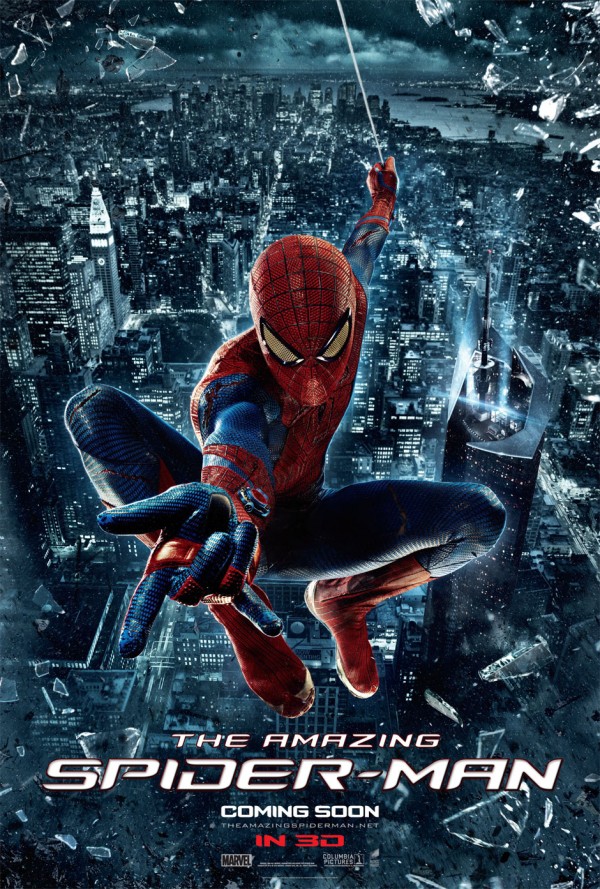 |
| THE AMAZING SPIDER-MAN: Those other Spiderman films were just a fly in the ointment |
What is most worrying about this trend is the lesson Hollywood execs might take away from it. Sure most of these remakes and reboots weren’t/won’t be hits, but most look like they will at least make their money back. Meanwhile, their one, big-budget all new film, “John Carter” crashed and burned at the box office.
Disney reportedly spent $250 million on the film which was based on the first book of Edgar Rice Burroughs’ Barsoom series of novels, “A Princess of Mars.” In its opening weekend it only made $30 million domestically while doing slightly better overseas with a $70 million haul. It quickly disappeared from theaters shortly afterward, pretty much guaranteeing it wouldn’t make its money back.
That’s a shame too, because Burroughs’ Barsoom novels, written in the early 1900s, are science fiction classics, and in many ways inspired all the space opera epics that came after it, from the “Flash Gordon” and “Buck Rodgers” serials in the ’30s and ’40s, to the “Star Wars” movies at the both the end of the 20th century and beginning of this century. Given time to catch on, “John Carter” could have found a bigger audience. (It’s due out on DVD soon, so perhaps those sales will help unsully the film’s bad reputation.)
 |
| MEN IN BLACK III: Can we user their Neuralyzer to forget this film was ever made? |
This would be a huge mistake. Hollywood is already loosing movie attendance to other media – video games and Internet streaming video services such as NetFlicks and Youtube – where there is a ton of original content available. Some of it even approaches Hollywood quality. (More on that too in another future blog post).
As more and better quality HD video cameras find their way into consumers’ hands and film editing – once the domain of only highly skilled professionals – becomes easier and easier to do on even the most inexpensive of home computers, then Hollywood may find itself becoming more and more irrelevant as people choose to bypass them, and get their entertainment straight from these amateur filmmakers themselves.
If Hollywood wants to avoid this fate, then they are going to have to get pretty creative.
Thursday, June 7, 2012
R was for Ray…
 |
Photo courtesy of the Associated Press
Ray Bradbury poses for a photo at a Waukegan, Ill. park named in his honor in this 1990 AP file photo. He wrote about playing in the park as a child in "Dandelion Wine." Bradbury, who wrote everything from science-fiction and mystery to humor, died Tuesday, June 5, 2012 in Southern California. He was 91. |
Yesterday, science fiction and fantasy fans learned they had lost one of their long-time heroes, Ray Bradbury, who died in Los Angeles after a lengthy illness. He was 91.

The multiple award-winning author of such classics as “The Martian Chronicles,” “Fahrenheit 451,” “Something Wicked This Way Comes,” “R is for Rocket” and “I Sing the Body Electric” inspired generations of people including filmmaker Steve Spielberg and author Steven King.
“He was my muse for the better part of my sci-fi career,” Spielberg said in an interview with CNN. “He lives on through his legion of fans. In the world of science fiction and fantasy and imagination he is immortal.”
 “Ray Bradbury wrote three great novels and 300 great stories,” King says in the same CNN article.
“One of the latter was called ‘A Sound of Thunder.’ The sound I hear today is the thunder of a giant’s footsteps fading away. But the novels and stories remain, in all their resonance and strange beauty.”
“Ray Bradbury wrote three great novels and 300 great stories,” King says in the same CNN article.
“One of the latter was called ‘A Sound of Thunder.’ The sound I hear today is the thunder of a giant’s footsteps fading away. But the novels and stories remain, in all their resonance and strange beauty.”But perhaps his greatest impact was on the millions of everyday people who read his work.
 “I remember reading Fahrenheit 451 in high school and suddenly ‘getting’ sci-fi,” wrote wolfpack75, commenting on the author’s obit on the sci-fi website IO9.com. “In that, I had the realization that unlike the books I had read before, science fiction can be fiction you relate to and understand and, in some ways, can understand you. I was reading pure escapist fiction beforehand: superhero comic books, Dumas’ Musketeers series, Fantasy novels (D&D related mostly). It is an amazing story and lead (sic) me to such authors as Heinlein, Asimov, Clarke, etc. His books opened doors in my mind that I never knew were shut. For that I am eternally grateful and will miss Ray Bradbury.”
 Like wolfpack75, I trace my real introduction to science fiction to Bradbury’s short stories. Before I discovered them, I didn’t tend to read much. I am dyslexic and a slow reader and as a child I hated reading because it took me such a long time to finish a book. As a result the only things I tended read were “Star Trek” books because I didn’t have to work so hard to understand them. Then one day, in school I believe, I was introduced to Bradbury and suddenly discovered a whole new universe.
I don’t remember which story it was, but I do remember being wowed by the creepy, twisty ending. It eventually led me to reading some of his other works like “The Illustrated Man” and “The Martian Chronicles” and from there other full length novels by such authors as Robert Heinlein (“Starship Troopers,” “Glory Road,” “Friday”), Kurt Vonnegut (“Cat’s Cradle”) and Piers Anthony (The Incarnation of Immortality series).
 For opening my eyes up to whole new universes of wonder I, like so many others, owe Ray Bradbury a debt that can never be repaid. And as an aspiring sci-fi writer myself, I can only hope to be half as eloquent as he was.
That said, I will leave the last word about his death to the great author himself who wrote in “Fahrenheit 451”:
“Everyone must leave something behind when he dies, my grandfather said. A child or a book or a painting or a house or a wall built or a pair of shoes made. Or a garden planted. Something your hand touched some way so your soul has somewhere to go when you die, and when people look at that tree or that flower you planted, you're there.
“It doesn't matter what you do, he said, so long as you change something from the way it was before you touched it into something that's like you after you take your hands away. The difference between the man who just cuts lawns and a real gardener is in the touching, he said. The lawn-cutter might just as well not have been there at all; the gardener will be there a lifetime.”
Thursday, May 31, 2012
Will we get burned by our own Flame?
 |
Screen shot courtesy of Alexander Gostev/SecureList
This code sample from the Flame virus shows where the malware got its name. It is 20 MB in size – huge by typical malware standards – and is an extremely difficult piece code to analyze.
|
Today’s espionage seems to be all about computers and data.
On Tuesday it was reported that thousands of computers in Iran and across the Mideast have been infected with a sophisticated new virus called Flame.
Unlike previous malware attacks on Iran which were designed to disable or disrupt the infected computers, Flame appears to be just snooping around and gathering as much information as possible. According to Alexander Gostev, the head of the Global Research and Analysis Team at Kaspersky Lab, a Russian information-technology security firm known for its antivirus software, Flame can steal data in some unique ways, like turning on a computer's microphone to record audio, scanning for Bluetooth-active devices and taking snapshots of computer screens.
“The recording of audio data from the internal microphone is also rather new. Of course, other malware exists which can record audio, but key here is Flame’s completeness – the ability to steal data in so many different ways,” he writes in his recent SecureList blog posting. “Another curious feature of Flame is its use of Bluetooth devices. When Bluetooth is available and the corresponding option is turned on in the configuration block, it collects information about discoverable devices near the infected machine. Depending on the configuration, it can also turn the infected machine into a beacon, and make it discoverable via Bluetooth and provide general information about the malware status encoded in the device information.”
“The malware [also] has the ability to regularly take screenshots,” he continued. “What’s more, it takes screenshots when certain ‘interesting’ applications are run, for instance, IMs.”
Prior to Flame’s discovery, the only “super-viruses” that existed were in the movies or on TV. They were usually the product of some super-rich megalomaniac bent on world domination or a small group of super-smart hackers or some shady cabal with nefarious goals. But now it seems some government has taken a page from Hollywood’s playbook.
I say government, because cybersecurity researchers interviewed by The Wall Street Journal said “the complexity of Flame's coding and comprehensiveness of its spy capabilities could suggest it was the work of a government.”
“Currently there are three known classes of players who develop malware and spyware: hacktivists, cybercriminals and nation states,” Gostev said. “Flame is not designed to steal money from bank accounts. It is also different from rather simple hack tools and malware used by the hacktivists. So by excluding cybercriminals and hacktivists, we come to conclusion that it most likely belongs to the third group. In addition, the geography of the targets (certain states are in the Middle East) and also the complexity of the threat leaves no doubt about it being a nation state that sponsored the
research that went into it.”
Now I am not suggesting that our government shouldn’t be engaging in this type of cyber-espionage. On the contrary, I think we and our allies need to do anything necessary to stop Iran or any other governments controlled by radicals and/or fanatics of any sort from developing nuclear weapons.
But my fear is that we are releasing the proverbial genie from the bottle and are making ourselves vulnerable to the same kind of attacks. It’s well known that the Chinese military already employs hackers whose sole job it is breach the other country’s computer systems. According to some secret government documents which were leaked to WikiLeaks in December 2010, U.S. government agencies have been targeted several times with phishing attacks (social engineering attacks) since late 2002.
If we are going to engage in this kind of cyberwarfare, then we as a country need to be damn sure our critical computerized infrastructure systems are secure.
And they are not.
Just ask former N.J. governor Tom Kean and former Indiana congressman Lee Hamilton, who were co-chairs of the 9/11 Commission and now run the Bipartisan Policy Center's Homeland Security project.
"Much like the situation before the September 11, 2001, attacks, the federal government is not adequately organized to deal with a significant emerging national security threat," Kean and Hamilton said in a letter sent to Senate leaders urging action on cybersecurity. Both men cited recent statements by Director of National Intelligence James Clapper and FBI DIrector Robert Mueller warning that the cyber threat is expected to overshadow other terrorist threats facing the United States in the not-too-distant future.
If that doesn’t worry you, take a look at the U.S. government’s own Computer Emergency Response Team’s (CERT) web site. The number of patches issued by software vendors to close recently discovered security problems in the software we use everyday is staggering as is CERT’s list of current vulnerabilities.
This isn’t a problem that just affects Microsoft products. As demonstrated by the Flashback virus, even Apple products – which many believed to be immune to such attacks – are susceptible.
Cybersecurity isn’t just a government matter. We need to get our private sector to take it seriously too. We need them to start producing better software that can’t be exploited by every hacker with a few hours to kill and hardware that is less vulnerable to being hijacked.
The general public also has a role to play. Everyone who uses a computer should make it their business to learn how to protect themselves online. And I’m not talking about just creating passwords that are harder to guess than your kid’s birthdates or your pet’s name.
As a computer technician you would be surprised by how many viruses I’ve had to remove from the computers of otherwise intelligent people because they fell for some scam that they never would have fallen for in real life, or because they just clicked on some link or downloaded some “program” or screensaver without thinking.
Flame should be our wakeup call that we need to strengthen our cyberdefenses now, least we get burned by it later.
Thursday, May 24, 2012
These are the voyages of Free Enterprise….
 |
| DRAGON FIRE: The Falcon 9 rocket soars into space from Cape Canaveral Air Force Station in Florida, carrying the Dragon capsule to orbit at 3:44 a.m. EDT on Tuesday, May 22, 2012. Photo courtesy of NASA |
To listen to all the hyperbole, Tuesday’s launch of the Falcon 9 rocket marks “new era in [space] exploration.” It’s the first time a private company has launched a spacecraft to do something that previously only a government-run space agency has done before.
“We're now back on the brink of a new future, a future that embraces the innovation the private sector brings to the table,” NASA Administrator Charles Bolden said after the launch. “The significance of this day cannot be overstated. While there is a lot of work ahead to successfully complete this mission, we are off to a good start.”
Whether handing off the part of our space program to the private sector is a good thing or a bad thing remains to be seen, but it again got me thinking about what I had expected the space program to be like when I was a kid and what it has becoming today. It also got me wondering whether we should change the opening of “Star Trek” to:
“Space. The commercial frontier. These are the voyages of free enterprise. Its ongoing mission to exploit strange new worlds, seek out new products; and sell them to new civilizations. To boldly sell stuff where no one has sold stuff before.”
That’s not exactly as awe inspiring as the original and if I sound a bit cynical, then it’s probably just my fear that either businesses won’t see the profit in literally doing NASA’s heavy lifting or it will somehow sully my silly, idealistic notion that we should explore space simply for the sake of exploration.
 |
Ads on the sides of space ships aren't as far-fetched as you might think. Just
look at the side of the bright yellow container on this freighter from the
TV show "Battlestar Galactica." It reads: "Colonial Movers.
We Move Anywhere."
|
Let’s face it, shuttling supplies to the International Space Station (ISS), isn’t like shipping a truckload of widgets from China to the United States. Space travel is still a risky, dangerous and expensive endeavor. Just ask the families of the Challenger and Columbia astronauts. And it seems to me businesses are currently too focused on short-term profits to take the kinds of losses and make the kinds long-term of investments a space program needs.
The day of the launch, I recall hearing a radio report or reading an article that said SpaceX, the company behind the Falcon 9, is taking a heavy loss on this mission and it’s only because of seed money from NASA and the promise of hefty contract that they undertook it in the first place.
But what’s going to happen when the government’s seed money runs out? Will the enthusiasm of companies like SpaceX dry up? Then what happens to the space program? Will we have to outsource our space missions it to other countries like we are doing now? How much further behind would that put NASA’s aspirations to launch missions to Mars or the asteroid belt or even deeper into the solar system?
I’m not the only one to have this fear.
So did the great the great astronomer and host of the wildly popular “Cosmos” TV show, Carl Sagan. In the book “Conversations With Carl Sagan” (edited by Tom Head, University Press of Mississippi, copyright 2006), Sagan said in an interview with Charlie Rose: “It’s too expensive to do by private industry or wealthy individuals. What we’re talking about, the advantages that accrue, are largely long-term advantages.”
That sentiment was acknowledged in a political blog post on the LiveJournal blog site, where Sagan is paraphrased as saying that “if humans [are] to expand out toward the rest of the solar system and one day populate the stars [then] it would be because a government, or a consortium of them.”
Yet despite all my misgivings, I too can’t help but be excited by this turn of events. While I loved the idea behind the space shuttle program and creating humanity’s first reusable spacecraft, in retrospect, I think it was a mistake. From 1981 to 2012, all we really did was fly into Earth orbit, launch some satellites and build the ISS – all things that could have been done using Apollo-era rockets.
Now just think what we could have accomplished in those same 31 years had we had companies like SpaceX doing that work for us, letting NASA concentrate on returning to the moon or going to Mars. Even if NASA’s pace of technologically innovation had only been half that of the personal computer industry, we’d still probably be on Mars by now.
Two other comments also give me hope that we are headed down the correct path on our quest for the stars.
The first is from SpaceX founder Elon Musk, who compared Tuesday’s launch of the first commercial, for-profit space flight with the dawn of the internet. “This mission heralds the dawn of a new era of space exploration, one in which there is a significant commercial space element. It is like the advent of the Internet in the mid-1990s when commercial companies entered what was originally a government endeavor. That move dramatically accelerated the pace of advancement and made the Internet accessible to the mass market. I think we’re at a similar inflection point for space. I hope and I believe that this mission will be historic in marking that turning point towards a rapid advancement in space transportation technology.”
The second was made during a radio interview with a reporter from the nasawatch.com website, who pointed to historical precedent as to why such ventures work. He said that during America’s expansion westward, the U.S. Government would go out explore the land and establish an outpost on the new frontier. Almost as soon as that fort was established, who would come behind them, but the saloon-, inn- and shopkeepers.
For our sake, let’s hope both Musk and the guy from NASAWatch are right.
If they are, and space travel becomes available to the average person within my lifetime, then I think I am willing to accept the occasional ad plastered over my favorite starship hull.
Thursday, May 17, 2012
Where’s my flying car?
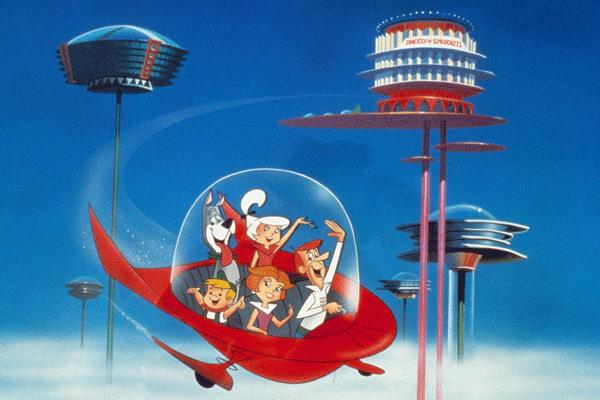 |
| FLYING CARS: I'm still waiting for one to show up in a showroom near me! |
When I was a kid in the late ’60s and ’70s, I looked forward
to the year 2000 and the shiny new future it was supposed to bring.
Watching TV shows such as “The Jetsons,” “Lost in
Space,” “Star Trek,” “Space: 1999” and “The Thunderbirds,” I was promised a future
with robots and space travel where people zipped around in jet packs through
domed, gleaming cities floating in the sky.
Well the year 2000 has come and gone and 12 years on, I
can’t help but feel cheated.
Sure we have a host of cool new technological gadgets that
no one had imaged way back then and thanks to the Internet, we have a world of
knowledge, trivia and mindless entertainment at our fingertips. And like most
everyone else, I’ve become so attached to all these gadgets that I don’t know
if I could really live without them anymore. I know for a fact, that I would
NOT be able to earn my living if it wasn’t for the technology boom that brought
us personal computers, the Internet, smartphones and iPods and iPads.
But what I really want to know is:
Where the frak is my flying car?!
And my robot maid?
And my jet pack?
And the moonbase and space ships
and all the other stuff we were promised?
How and why did we give up on
those dreams?
Yes, I realize that some of those
things are impractical. After all I live in New Jersey which is home to the
nation’s biggest collection of bad and/or distractible drivers (a group to
which I must admit to occasionally belonging), and the thought of a bunch of “Jersey
Drivers” haphazardly flying these vehicles around and the havoc that they could
cause makes me shutter. But the technology to build a flying car isn’t out of
our reach. As recently as this past April, a Dutch company demonstrated its
latest prototype, the PAL-V. However I don’t think it will take off
with consumers anytime soon.
Like all previous attempts at
flying cars, this vehicle fails to find the perfect balance between car and
flying machine. It looks too much like a helicopter with the car part added as
an afterthought. Other attempts, like the Convair Model 116, were too much like a car with the airplane parts literally just stuck on.
So perhaps the real reason the
flying car never really took off is because it tries to combine two very
different things and does neither well.
But you can’t tell me the same is true of the robot maid.
 |
| ROSIE MEETS ROOMBA: We were promised Rosie the
Robot Maid but only got Roomba. Is it any wonder
that I feel cheated?
|
No one I know likes cleaning his
or her own house, so almost everyone would want to buy a robot maid. We already
possess the technology to build robots that can do very complicated and
delicate work. Just ask any assembly line worker who has lost his or her job to
one. So why the heck don’t we have them?
Sure there is the Roomba, but it
only vacuums. I want something that also dusts, scrubs the bathroom, mops the
floors, does the dishes and laundry and picks up and puts away my clothes. (Thanks
to Microsoft, I’d still be doing Windows).
It’s not like I’m demanding the
thing look like Angelia Jolie in a French Maid’s outfit. (If it did, my wife
probably wouldn’t let me have it anyway!). Rosie from “The Jetsons” would be
just fine. Heck, even the WED Treadwell Septoid Repair Droid from “Star Wars” would be fine.
Yes they would be expensive at
first. But so was the television set, personal computer, iPod and cell phone.
Today all those products are nearly ubiquitous and relatively affordable. So
why isn’t some company looking into this. (I’m looking at you Dyson and dare I
say it, Apple).
But perhaps my biggest
disappointment is that the moonbases and missions to Mars everyone predicted
we’d be making by now back in the ’60s and early ’70s have never come to pass.
 |
SO CLOSE, YET SO FAR. Looking at The Eagle Transporter from "Space:
1999" (top) and the Apollo space capsule side by side, it's not hard to see
why I thought the fictional craftcould become a reality.
|
I guess we can blame that on the
end of the Cold War. The race to get to the moon and to claim mastery over
space was really all about showing our military might to the Russians. And
while I’m thankful not to have the threat of the A-bomb literally hanging over
our heads anymore, I’m disappointed that our desire to travel to other planets
within our solar system evaporated with those threats too.
As a 10-year-old back in 1975, I
couldn’t imagine a future where we weren’t already zipping around the solar
system in craft that looked suspiciously like the Eagle Transporter of “Space:
1999.” Just image if the pace of development of spacecraft had mirrored that of
the personal computer between 1975 and 2000.
In that 25 years period we went from the kit-based computers like the MITSAltair 8800 to hand-held computers like the Palm m100. At that same rate of advancement, the Eagle Transporter, which bore a strong
resemblance to NASA’s Apollo era capsules and rockets, didn’t seem that
inconceivable.
Now as a 47-year-old with two
young nephews, I wonder what they expect of their future and if they’ll be able
to succeed in making their dreams a reality.
Perhaps they’ll be the ones to perfect the flying car or robot maid.
I hope so.
Friday, May 11, 2012
One OS to rule them all….
 |
| Becoming obsessed with creating one operating system for all our tech devices may not be such a good idea. Just ask Gollum. |
Ever since I started playing with Windows 8 Consumer Release Candidate 1 about a month ago I have been thinking about wisdom of having one
operating system for all our tech gadgets.
The idea is intriguing. Master one set of rules and no
matter what device you are on – whether it be your smartphone, tablet, laptop,
desktop, or even a refrigerator with a touch screen – everything works the
same. No more having to break out the manual – if there even is
one — to decipher some instructions that are so arcane that even the wizard
Gandalf would have trouble following them.
But the more I think about it, the more I am beginning to
think that this is a bad idea.
A very bad idea.
An idea so bad that it – and Windows 8 – could only have come from some volcano in
the heart of Mordor. (Which, come to think of it, Microsoft is kind of the
Mordor of SoftwareLand…)
My thoughts were confirmed after trying to use
Windows 8 to do the things I've always done on my desktop computer. And if your
experience turns out like mine, then I think that instead of making things
easier for consumers, a single operating system for all devices will ultimately
make things much more difficult for the average consumer.
Why?
Because each of our favorite tech devices has a specific use
and function, and it is that function that should dictate how the device’s
software works, not the other way around. It’s a matter of form following
function, not the other way around.
Let’s take the smartphone for instance. It’s primarily a
communications device. It was designed to be used for making phone calls,
texting and for checking your e-mail and/or calendar. Sure today’s smartphones
can do other things too. They make pretty decent point-and-shoot still- and
video- cameras, can play music and with millions of “apps” floating out there in
cyberspace, smartphones can do tons of other stuff. Heck, I have one app on my
phone that even turns it into a pretty useful flashlight. But it is still my
phone first. It only serves as a
flashlight when I can’t find a real one around when I need it.
Tablets on the other hand are what I’d call “entertainment
devices.” With their big screens, they are excellent for watching videos or
browsing the web, reading an e-book and even composing a short e-mail or
two. They’re even pretty good for
playing simple yet addictive games (Angry Birds anyone?). Like their smaller
smartphone cousins, a tablet’s capabilities can be expanded with any of a
million apps, but without the addition of at least a keyboard, I wouldn’t want
to do anything that required extensive text entry. That’s why we have laptops
or desktop computers.
Laptops and desktops are the real workhorses of all our tech
devices. They are best suited for writing long-winded articles like this, or
creating and manipulating complicated spreadsheets or editing video. Some even
make pretty decent gaming machines. Of
course you could do all those things on a smartphone or tablet, but given
a choice, I’d rather type a story or work on a spreadsheet on a device with a
full-sized, physical keyboard; mouse and a nice big LCD monitor. I think you would
too.
Again the form
something takes should be derived directly from its intended function. I
believe the popularity and intuitiveness of Apple products came from Steve
Job’s strict adherence to this idea.
Now I have never been an Apple fanboy and
probably never will (I don’t like their snobby, superior attitude), and I am more comfortable in the
world Microsoft created, but Microsoft could learn a thing or two from Apple on
this score. An operating system should be designed around the function of the
device and since computers, tablets and smartphones are all different animals,
I don’t think it’s possible to unite all three seamlessly. There are too many
compromises that have to be made to get everything to work and Windows 8’s
usability proves this beyond a shadow of a doubt.
I give Microsoft full credit for trying to push boundaries
and exploring the idea. But what they've come up with just doesn’t work.
A better idea would be to build an OS that would recognize
what kind of device it’s on and adjust its interface and capabilities
accordingly instead of foisting a touch-screen based interface on
desktop/laptop users, who have no need for them because keyboard and mouse input works just fine for them and is more practical.
Designer Prashant Chandra has already demonstrated how something like this could work with his hybrid Lifebook mockup. It contains a removable tablet, smartphone
and camera that can be plugged into a notebook shell. As each of these devices
is plugged in to the notebook, they seamlessly share data though a master OS
running on the notebook. Unplug one of the units, like the tablet or smartphone, and you are now running a thinned down version of that OS specifically
made for a smartphone, tablet or camera.
The concept is not unlike the concept behind Microsoft's Office suite or Adobe’s Creative Suite. Each of the programs in Office
– Word, Excell,
Powerpoint, Outlook and Access
– are made to do different things
– like writing a letter, creating spreadsheets or building small databases
– but share a very common interface so users can move between them with ease. The same is true of Adobe's product. Photoshop is for pictures, Illustrator for drawing and InDesign for page layout, yet all three share the a common interface that makes it easy to jump between those programs without thinking. Seems to me the same can be done between the different
hardware platforms.
Subscribe to:
Posts (Atom)